
Following the torrential rains that swept across Accra on Monday 29 June 2026, parts of Ghana’s capital experienced some of the most severe flooding seen in recent years. Homes were inundated, businesses destroyed, roads disappeared beneath floodwater and emergency services carried out dozens of rescue operations throughout the day.
The scenes have been heartbreaking. Families have lost loved ones, many businesses have suffered extensive damage and thousands of residents have been left counting the cost of one devastating afternoon.
However, if you have been following events solely through social media, you could easily believe that the whole of Accra was submerged beneath floodwater. That simply wasn’t the case.
While the flooding was severe and tragic, it affected some communities far more than others. Much of Accra experienced heavy rain, traffic disruption and temporary road flooding rather than complete inundation.
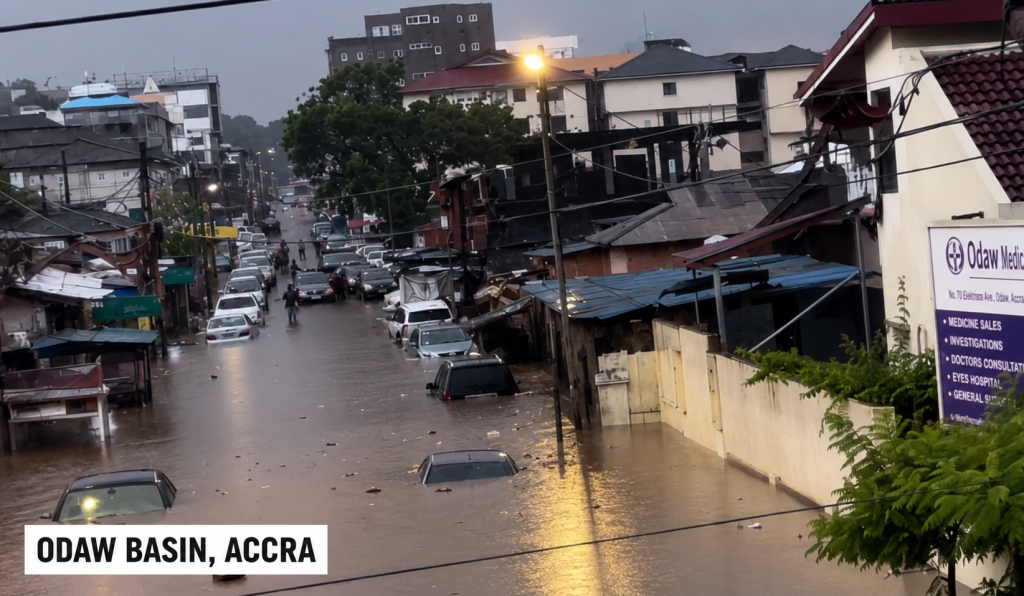
At the same time, social media has become flooded with misinformation, AI-generated videos and recycled footage from previous disasters, making it increasingly difficult to separate fact from fiction.
This is what we know.
What Happened?
Heavy rainfall moved across the Greater Accra Region on Monday 29 June, overwhelming drainage systems and causing floodwaters to rise rapidly in several parts of the city.
According to President John Dramani Mahama, approximately 140mm of rain fell during the storm, making it one of the most intense single-day rainfall events Accra has experienced in several years. The rainfall far exceeded the highest daily rainfall recorded during the previous year and fell after an already exceptionally wet month.
Roads quickly became impassable, vehicles were stranded, homes and businesses flooded, while emergency services responded to rescue calls across the city.
The Ghana National Fire Service, Ghana Police Service, NADMO, the Ghana Armed Forces’ 48 Engineers Regiment, military personnel and local volunteers worked throughout the day using rescue boats, canoes and heavy equipment to reach trapped residents.
Sadly, lives were lost and many more people were displaced or suffered significant property damage.
Was the Whole of Accra Flooded?
No.
One of the biggest misconceptions online is that the entire city was underwater.
The worst flooding occurred in specific low-lying communities, areas surrounding major waterways and locations where drainage systems became overwhelmed.
Many other parts of Accra experienced heavy rainfall, severe traffic congestion and localised flooding before conditions gradually improved as water levels receded.
As with most major storms, the impact varied considerably depending on location.
Areas Most Affected
Reports from emergency services and local media indicate that some of the worst affected communities included:
- Odaw Basin
- Adabraka
- Kaneshie
- Kwame Nkrumah Interchange (Circle)
- Avenor
- Alajo
- Achimota
- Achimota Overhead
- Abossey Okai
- Mallam Junction
- Weija
- Ofankor
- North Kaneshie
- Dzorwulu
- Parts of East Legon
- Odorna Market area
- Tema Community 18
Some of these areas experienced floodwater entering homes and businesses, while others saw roads completely cut off for several hours.
If you are planning to visit Accra, it is important to understand that these represent the worst affected areas rather than the city as a whole.
Why Did the Flooding Happen?
The flooding was not caused by one single issue.
Following an aerial inspection of the city, President Mahama explained that several factors combined to create the disaster.
Record rainfall
Meteorological data shows that June 2026 has been significantly wetter than previous years.
According to figures shared by the President:
- June 2024: approximately 85mm of rainfall
- June 2025: approximately 172mm
- June 2026: approximately 333mm
In June 2026, rain fell on around twenty-two days, leaving little time for the ground, rivers and drainage systems to recover before another major storm arrived.
Accra’s geography
Accra sits between the Akwapim Ridge and the Atlantic Ocean.
Historically, streams flowed naturally from the hills across open plains before reaching the sea.
As the city has expanded over many decades, roads, housing developments and commercial buildings have increasingly restricted these natural drainage channels.
Development on waterways and flood plains
Another significant contributor has been development on waterways, wetlands and natural flood plains.
When buildings occupy areas originally intended to carry floodwater, less space remains for water to flow safely towards the sea during periods of intense rainfall.
President Mahama announced that district assemblies will identify structures obstructing waterways, with plans to remove them as part of a long-term flood mitigation programme.
Blocked drains and illegal dumping
Poor waste disposal continues to worsen flooding across the city.
Plastic waste, household rubbish and construction debris frequently clog gutters and storm drains, reducing their capacity to carry large volumes of water.
During the aerial inspection, the President also highlighted illegal dumping sites within wetlands, where waste is deposited before the reclaimed land is later sold for housing developments.
This practice destroys natural drainage areas while increasing flood risks for surrounding communities.
Ultimately, officials describe the flooding as the result of exceptional rainfall combined with engineering challenges, rapid urban growth and human behaviour.
The Human Cost
Behind every flooded street is a family whose life has been turned upside down.
Residents have lost homes, vehicles, businesses, household possessions and years of hard work within just a few hours.
Emergency responders carried out numerous rescues throughout the day, with many residents evacuated by boat after becoming trapped inside their homes.
Some residents reportedly refused to leave because they feared looting if their homes or businesses were left unattended.
The Government has announced emergency relief funding to support affected communities and assist those who suffered the greatest losses.
Fires, Looting and Other Challenges
The flooding created several additional emergencies beyond rising water levels.
A major fire broke out in the Odorna Market area, but floodwaters severely restricted access for firefighters attempting to reach the scene.
Flooding We’ve Never Witnessed Before” – Zanetor Rawlings Reacts to Accra Floods – ChannelOneTV
Elsewhere, reports emerged from Tema Community 18 that floodwaters swept goods from a warehouse downstream, leading to incidents of opportunistic looting as people recovered merchandise from the water.
These incidents highlight how severe flooding can quickly trigger multiple emergency situations beyond the flood itself.
Beware of Fake and AI-Generated Flood Videos
As the disaster unfolded, social media quickly became flooded with dramatic videos claiming to show conditions across Accra.
While many clips genuinely document rescue operations and the devastating impact on affected communities, others are entirely fabricated or taken out of context.
Several AI-generated videos have circulated online showing impossible scenes such as sharks swimming through flooded streets, people surfing on floating sofas and other obviously unrealistic situations.
Other videos have been recycled from previous floods in different countries and falsely presented as recent footage from Accra.
Before sharing any video, check whether it comes from a recognised news organisation, emergency service or trusted local source.
It is also worth noting that some authentic videos are extremely distressing and include rescue attempts, fatalities and victims being recovered from floodwaters. Viewer discretion is strongly advised.
Advice for Visitors
If you are travelling to Accra in the coming days or weeks, there is no need to assume the entire city has been devastated.
Many hotels, restaurants, shopping centres and tourist attractions outside the worst affected communities are expected to continue operating normally once floodwaters recede and roads reopen.
If heavy rain is forecast:
- Check weather forecasts before travelling.
- Follow advice issued by local authorities.
- Avoid driving or walking through floodwater.
- Allow additional travel time.
- Contact your accommodation if you have concerns about local conditions.
Like many coastal cities around the world, Accra can experience localised flooding during periods of exceptionally heavy rainfall, particularly during the major rainy season.
Looking Ahead
Following the floods, President Mahama announced plans to accelerate measures aimed at reducing Accra’s long-term flood risk.
These include:
- Clearing blocked drainage channels.
- Removing structures obstructing waterways.
- Tackling illegal dumping into wetlands.
- Improving stormwater engineering and drainage infrastructure.
- Supporting longer-term plans to decongest Accra by encouraging future development beyond the capital.
The President acknowledged that some of these measures will require difficult decisions, including the removal of buildings that obstruct natural waterways, but stressed that permanent solutions are needed if Accra is to reduce the impact of future floods.
video from Graphic Online TV of President Mahama inspecting flood hit areas in Accra
viewGhana’s Thoughts
The flooding of June 2026 is a reminder that disasters are rarely caused by a single event. Exceptional rainfall may have triggered the crisis, but decades of rapid urbanisation, pressure on drainage infrastructure, development on natural waterways and poor waste management have all contributed to the city’s vulnerability.
As Ghana begins the long process of recovery, our thoughts are with every family affected by this tragedy.
We also encourage everyone to rely on verified information, support affected communities where possible and think carefully before sharing unverified videos or sensational content online.
Accra remains one of Africa’s great cities resilient, vibrant and welcoming. The events of this week have shown both the challenges the city faces and the remarkable courage of the emergency services, volunteers and ordinary residents who came together to help one another during an incredibly difficult time.